
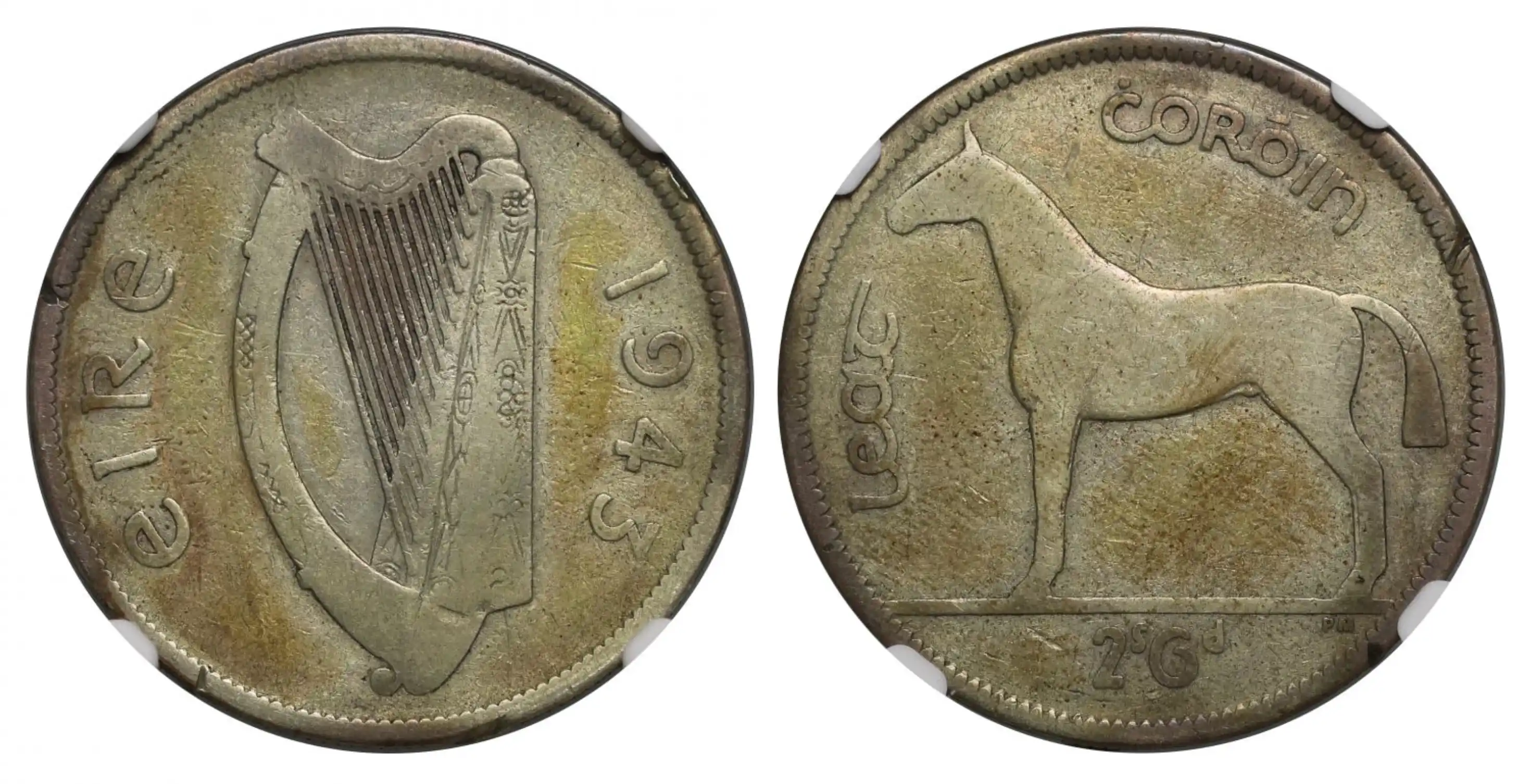
In the numismatic field, the Irish coins are not an exception in high values and popularity among top collectors, because they have records of $45,000 and more dollars for the one issue. The top 6 rare Irish coins will surprise every beginner and professional collector.
The 1938 Pingin (Penny)
Year | Composition | Shape |
1938 | Bronze | Round |
The 1938 Pingin stands alone as the ultimate trophy in modern Irish coin history. In 1937, Ireland adopted a new constitution and changed its official name from the Irish Free State to Ireland (Éire). This change required a brand-new legend design on national coinage.
The Dublin Mint struck a handful of pennies in 1938 to test the new dies with the word "Éire" before mass production began in 1939. Officials never released these 1938 pennies into general circulation.
Item Value $45,000–$100,000+
The 1943 Flóirín (Florin)
Year | Composition | Shape |
1943 | Silver | Round |
The 1943 two-shilling piece carries a history of World War II. During the war, silver prices rose rapidly. The Irish government feared a severe shortage of raw materials. To protect national wealth, the state enacted an emergency silver reclamation act.
The Dublin Mint ordered the immediate destruction of the entire newly minted 1943 silver inventory. Workers threw hundreds of thousands of freshly struck 1943 florins directly back into the melting furnaces before the coins ever left the mint vaults.
Item Value $6,500–$18,000+
The 1943 Leathchoróin (Halfcrown)
Year | Composition | Shape |
1943 | Silver | Round |
The item suffered the exact same fate under the wartime melting order. The government sought to reclaim the 75% silver content from these high-denomination coins to store bullion securely.
While the 1943 halfcrown survived in higher numbers than the florin, it remains an elusive prize. This issue commands massive price bonuses over every other regular-issue pre-decimal Irish coin.
Item Value $1,200–$4,500+
The 1985 Twenty-Pence (20p) Piece
Year | Composition | Shape |
1985 | Nickel brass | Round |
The 1985 twenty-pence piece is a modern production error. Ireland prepared to introduce a new 20p coin denomination to the public in 1986.
In late 1985, the Central Bank of Ireland struck a small trial batch of 500 coins. The bank sent these pieces to vending machine manufacturers and telecom operators so engineers could calibrate machines in advance. The bank ordered the strict return of all trial samples, but workers failed to retrieve 50 pieces.
Item Value $2,000–$4,000+
The 1937 Leathchoróin (Halfcrown)
Year | Composition | Shape |
1937 | Silver | Round |
In contrast to pattern pieces or mint errors, the 1937 halfcrown was an official circulation issue. It represents the final year of the Saorstát Éireann (Irish Free State) coinage series.
The Dublin Mint struck only a tiny quantity of halfcrowns in 1937 because economic activity slowed. This low mintage makes the 1937 date a massive roadblock for collectors who want to complete a date-run set of pre-decimal halfcrowns.
Item Value $150–$1,000+
The 1966 Padraig Pearse Matte Proof 10-Shilling
Year | Composition | Shape |
1966 | Silver | Round |
Ireland struck its first official modern commemorative coin in 1966, the 50th anniversary of the Easter Rising. The coin depicts the Irish patriot Padraig Pearse.
The Dublin Mint produced over two million standard circulation pieces, which carry minimal value today. The mint also struck a special subset of matte proof pieces for top dignitaries and special archive presentations.
Item Value $1,500–$3,000+
Top 6 Rarest Irish Coins Comparison Table
The data table below provides the top metrics for rapid identification and market evaluation of these six numismatic items.
Item | Metal | Rarity |
1938 Pingin (Penny) | Bronze | Ultra-Rare (2 Known) |
1943 Flóirín (Florin) | 75 % Silver | Extremely Rare |
1943 Leathchoróin (Halfcrown) | 75 % Silver | Very Rare |
1985 Twenty Pence | Nickel-Bronze | Scarce Trial Error |
1937 Leathchoróin (Halfcrown) | 75 % Silver | Key Date |
1966 Padraig Pearse 10s | 83.3 % Silver | Ultra-Rare Matte Proof |
Authenticate & Protect High-Value Irish Coins
The Peril of Contemporary Counterfeits
High market values attract illicit activity. Fraudulent sellers distribute high-quality replicas of the 1938 penny and the 1943 silver coins on online marketplaces. Sophisticated fakes often use genuine, worn Irish coins from common years as host planchets.
Fraudsters alter the final digit of the date under a microscope. Buyers must inspect the weight, diameter, and edge reeding details with digital calipers before they commit funds.
Third-Party Certification (PCGS & NGC)
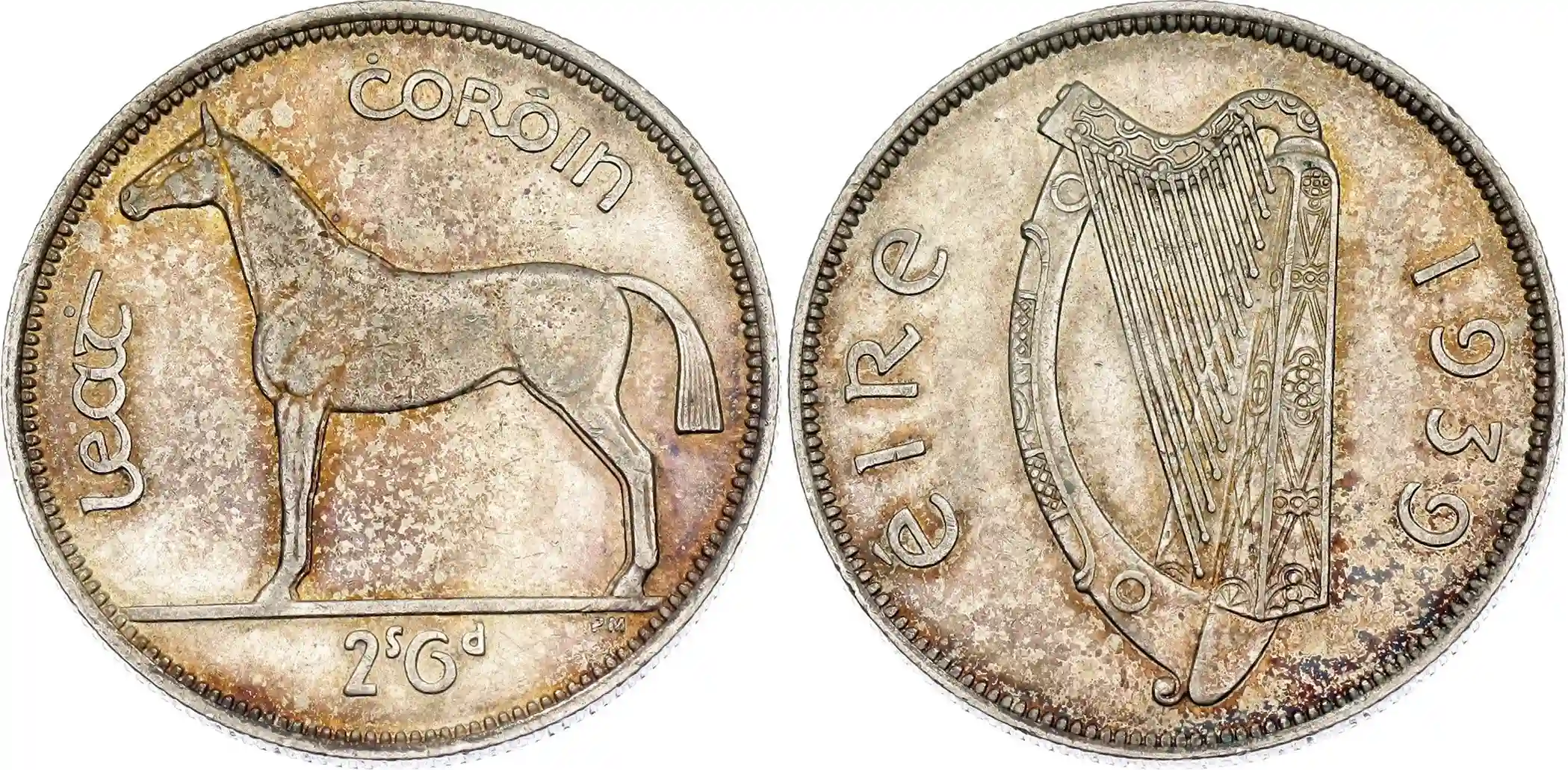
You should obtain third-party certification to secure the maximum financial value of your Irish coin collection. Professional grading companies such as NGC possess the tools to verify authentic metal composition and surface integrity.
A certified plastic slab protects the delicate surfaces from environmental moisture. Furthermore, encapsulation ensures trust among elite buyers, which unlocks the full five-figure potential of these top six Irish numismatic rarities.
Where to Buy Irish Items
You won't find them via standard retail outlets, because they are museum-quality pieces. Your ways are auction houses and coin galleries.
Auction Houses
Whyte’s (Dublin) – Ireland’s premier specialist auction house for collectibles. Their recurring Eclectic Collector sales are the ground-zero market for ultra-rare pre-Euro Irish coinage.
Major Global Firms – Heritage Auctions, Stack’s Bowers, and Baldwin's (UK) regularly feature certified, top-pop Irish rarities within their world coin signatures.
Dedicated British & Irish Dealers
Dublin Coin Galleries – a physical and online destination specializing heavily in historic Irish banknotes and hammered or milled coins.
BNTA & Irish Numismatic Members – Sourcing through dealers registered with the British Numismatic Trade Association (BNTA) ensures strict adherence to authenticity guarantees.